
Can EX4 Files Be Decompiled? What You Need to Know
Can EX4 Files Be Decompiled? What You Need to Know
If you work with MetaTrader 4, you have probably encountered an EX4 file. Expert Advisors, custom indicators, and trading tools are commonly distributed in EX4 format because it allows the program to run in MetaTrader 4 without exposing the original MQL4 source code.
This leads to an important question:
Can EX4 files be decompiled back into MQ4 source code?
The short answer is: sometimes, but it depends heavily on the EX4 file, its compilation history, protection, dependencies, and the tools being used.
EX4 decompilation is not the same as simply converting one file format into another. Understanding the difference is important before attempting to recover source code.
What Is an EX4 File?
An EX4 file is the compiled form of an MQL4 program used by MetaTrader 4.
When an MQL4 developer writes source code, the file normally has an .mq4 extension. The code is compiled through MetaEditor, producing an .ex4 file that MetaTrader 4 can execute.
The basic process looks like this:
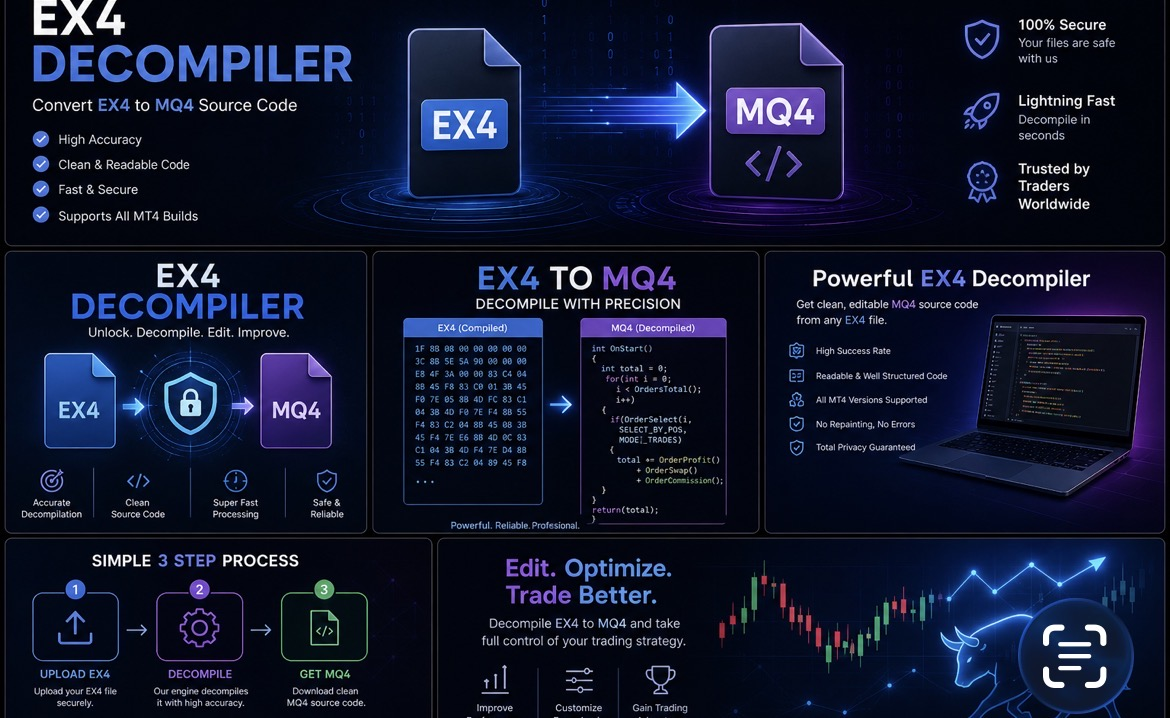
MQ4 Source Code → Compilation → EX4 Program
The EX4 file therefore contains compiled program information rather than the original editable source in its normal form.
An EX4 file can be used for different types of MT4 programs, including:
- Expert Advisors (EAs)
- Custom indicators
- Scripts
- Automated trading systems
- Trading utilities
- Copy-trading components
Can an EX4 File Be Decompiled?
In some circumstances, EX4 source code can be partially or substantially recovered, but there is no universal guarantee that every EX4 file can be converted into the exact original MQ4 source.
Modern EX4 files can contain protections and compiled structures that make source recovery considerably more difficult than older versions.
A successful recovery may depend on factors such as:
- The MetaTrader 4 build used during compilation
- The age of the EX4 file
- Compiler characteristics
- Protection mechanisms
- Code complexity
- Obfuscation
- External libraries
- DLL dependencies
- File integrity
- Licensing or activation systems
For this reason, it is better to think of the process as EX4 source-code recovery rather than a guaranteed one-click conversion.
EX4 Decompilation vs. EX4 to MQ4 Conversion
These terms are often used interchangeably, but they describe a more complicated process.
A normal file conversion takes information that already exists in one format and represents it in another format.
For example:
Image → PNG
EX4 source recovery is different.
The original source code was compiled into an executable format. The recovery process attempts to reconstruct usable MQL4 code from information available inside the compiled program.
Therefore:
EX4 → MQ4 is not a normal file conversion.
A recovered MQ4 file may require additional reconstruction and testing before it behaves exactly like the original project.
Will the Recovered MQ4 Be Identical to the Original?
Not necessarily.
This is one of the most important things to understand about EX4 decompilation.
The original developer’s source code may have contained:
- Comments
- Formatting
- Meaningful variable names
- Function organization
- Original project structure
- Development notes
- Unused code
- Specific coding conventions
Some of this information may not survive compilation in a form that can be perfectly reconstructed.
As a result, recovered source code can sometimes require manual cleanup or rebuilding.
A recovery may provide a functional and editable representation of the program, but that does not automatically mean it will be an exact copy of the developer’s original MQ4 project.
Why Are Some EX4 Files More Difficult to Recover?
Not all EX4 files are created under the same conditions.
An older EX4 compiled under an earlier environment can behave very differently from a newer protected file.
1. Compiler and Build Differences
MetaTrader has evolved over time. Changes to the MQL4 language, compiler, and executable protection can affect how difficult source recovery becomes.
The build associated with an EX4 file can therefore be an important factor during analysis.
2. Code Complexity
A simple indicator may contain relatively straightforward trading logic.
A sophisticated Expert Advisor might contain:
- Multiple strategies
- Complex calculations
- Risk management
- Trading filters
- Time restrictions
- Account checks
- License verification
- External communication
- Multiple modules
The more complicated the program, the more work may be required to reconstruct and test the source.
3. DLL Dependencies
Some EX4 programs rely on external DLL files.
MQL4 supports importing functions from external DLLs, meaning part of the program’s functionality may exist outside the EX4 itself.
This creates an additional challenge.
Recovering the MQL4 code does not necessarily recreate the functionality contained inside an external DLL.
For DLL-dependent systems, you may need to identify:
- The required DLL
- DLL function calls
- Required parameters
- File locations
- External dependencies
- Licensing or activation requirements
What About Copy-Trading EX4 Files?
Copy-trading systems are another important category.
A copy-trading EA may contain logic for:
Master Account → Signal/Data → Receiver EA → Trading Account
Depending on how the system was developed, the EX4 may communicate with other components through files, network services, DLLs, or compiled libraries.
Recovering the MQL4 component does not automatically recreate every external service that the original system depended on.
This is why a copy-trading EX4 should be analyzed together with its supporting files whenever possible.
What Information Can Be Recovered?
Depending on the particular file and recovery method, useful information may include:
- Trading logic
- Indicator calculations
- Entry conditions
- Exit conditions
- Stop-loss logic
- Take-profit logic
- Money-management rules
- Input parameters
- Trading filters
- Order-management functions
- Symbol and timeframe conditions
- External function calls
- Program structure
The amount of recoverable information varies from file to file.
Why a Decompiler May Fail
There are several reasons an EX4 source recovery attempt may not produce usable MQ4 code.
For example:
The EX4 Is Highly Protected
Additional protection can make reconstruction significantly harder.
The File Is Damaged
A corrupted or incomplete EX4 may prevent proper analysis.
External Components Are Missing
An EA that depends on DLLs or other libraries may not work correctly without those components.
Licensing Is Required
Some commercial programs perform license checks against an account, computer, server, or external activation system.
The Recovered Code Requires Repair
Even when source material is recovered, it may need manual corrections before it compiles or operates correctly.
Can You Just Rename EX4 to MQ4?
No.
Renaming:
MyExpert.ex4
to:
MyExpert.mq4
does not convert the compiled program into source code.
The file extension describes the type of file, but changing the extension does not reconstruct the original MQL4 source.
The same applies to simply opening an EX4 file in a text editor. You will not obtain the original readable MQL4 program that way.
What Should You Do Before Attempting EX4 Source Recovery?
If you own the EX4 or have authorization to analyze it, preserve everything associated with the program.
Keep the original:
- EX4 file
- DLL files
- EX4 libraries
- Configuration files
- Preset files
- Supporting indicators
- Documentation
- Activation information
- Original MT4 environment, if available
Do not modify the original file before analysis.
It is also useful to record the MT4 build and environment where the program originally worked.
How Does Professional EX4 Source Recovery Work?
A professional recovery process generally involves more than pressing a button.
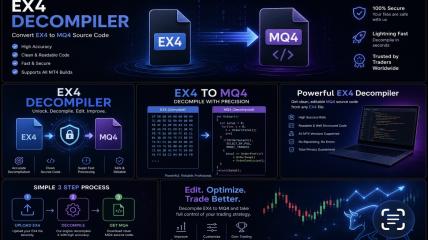
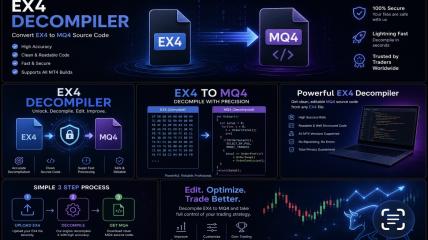
A typical workflow can involve:
Step 1: Analyze the EX4
The file is examined to determine its characteristics, compatibility, and potential dependencies.
Step 2: Identify External Components
DLLs, libraries, files, and other dependencies are checked where applicable.
Step 3: Attempt Source Reconstruction
Specialized techniques may be used to reconstruct MQL4-compatible source material.
Step 4: Repair the Code
Recovered code may need structural or compilation fixes.
Step 5: Compile in MetaEditor
The resulting MQ4 is compiled to identify errors and compatibility problems.
Step 6: Test in MetaTrader 4
The program should be tested in a controlled environment, preferably on a demo account first.
Step 7: Compare Behavior
The recovered program can be compared with the original EX4 to determine whether its important functionality behaves as expected.
Is EX4 Decompilation Guaranteed?
No.
Anyone claiming that every EX4 can be recovered perfectly should be treated cautiously.
EX4 files vary considerably, and modern protection mechanisms can make source recovery difficult or impossible in some cases.
A more accurate approach is to evaluate the specific file before making a firm claim about the expected result.
Is EX4 Source Recovery Legal?
The legal situation depends on ownership, licensing, jurisdiction, and the purpose of the recovery.
If you created the EA yourself, lost the original MQ4, or have explicit authorization from the copyright holder, recovering source code can be a legitimate maintenance or restoration task.
You should not assume that owning an EX4 automatically gives you permission to reverse engineer or redistribute someone else’s proprietary software.
Always check the applicable license and legal requirements before proceeding.
EX4 Decompiler for Lost Source Code
One of the legitimate reasons developers investigate EX4 source recovery is loss of the original MQ4 project.
For example, a developer may have:
- Lost an old computer
- Deleted the source code
- Lost a backup
- Changed hosting environments
- Inherited an old trading system
- Retained only the compiled EX4 version
In these situations, source recovery may be useful for maintenance, modification, or migration.
The goal is not necessarily to obtain someone else’s proprietary strategy. It can simply be to restore access to software that the owner is already authorized to maintain.
Frequently Asked Questions
Can every EX4 file be decompiled?
No. Recoverability varies depending on the file’s build, protection, complexity, dependencies, and condition.
Can EX4 be converted directly to MQ4?
Not in the ordinary sense of file conversion. Recovering MQ4 involves reconstructing source code from a compiled EX4 program.
Will EX4 decompilation recover the original comments?
Not necessarily. Comments and other source-level information may not survive compilation in a recoverable form.
Can DLL-protected EX4 files be recovered?
Some DLL-dependent programs can be analyzed, but the external DLL itself may contain functionality that is not present in the EX4 source.
Can a recovered MQ4 file be edited?
If usable source code is successfully recovered, it can generally be opened and edited in MetaEditor. However, the recovered code may require repair before successful compilation.
Can an EX4 file be opened without MetaTrader 4?
An EX4 is designed for the MetaTrader 4 environment. Simply opening it in a normal text editor will not display the original MQL4 source code.
How long does EX4 source recovery take?
There is no universal timeframe. Simple files may require less analysis, while complex, protected, damaged, or DLL-dependent files can require substantially more work.
Final Thoughts
Can EX4 files be decompiled?
In some cases, yes—but EX4 source recovery is not a guaranteed or ordinary file conversion process.
The result depends on the individual EX4 file, its compiler/build history, protection, complexity, external dependencies, and overall condition.
If you have a legitimate reason to recover an MQL4 project from an EX4 file, the safest approach is to preserve the original file and all dependencies, analyze the file first, and test any recovered source carefully before using it in live trading.
Most importantly, avoid assuming that a recovered MQ4 will always be an exact copy of the original source. EX4 decompilation is best understood as a source-code recovery and reconstruction process.